
No products in the cart.
 Bakery Equipment
 Food processing machine
 Packaging equipment
 Food packaging materials
 Commercial kitchen equipments
Knowledge Center
Differences Between Meat Bowl Cutter And Meat Grinder
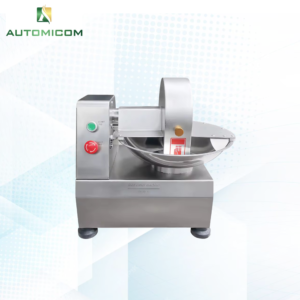
DIFFERENCES BETWEEN BOWL CUTTER AND MEAT GRINDER
1. Introduction & Overview
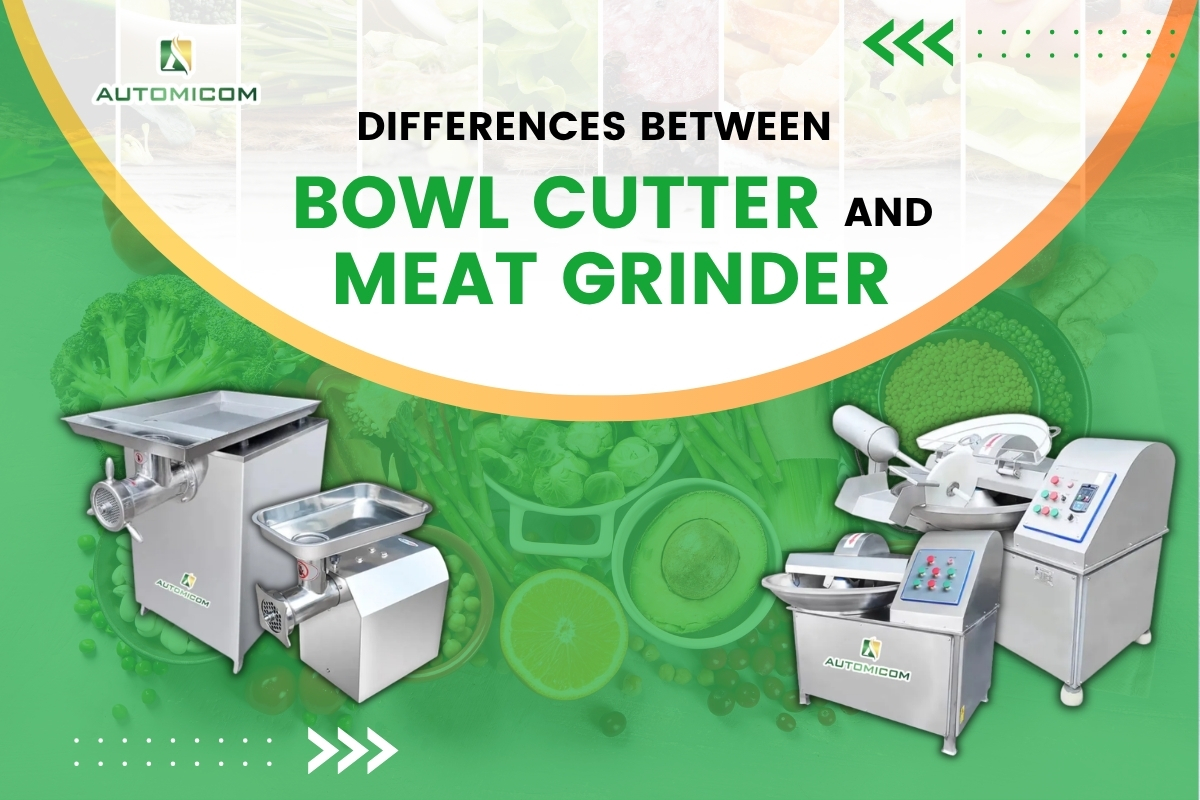
In the food processing industry, selecting the right equipment is critical to ensuring product quality, efficiency, and consistency. Two of the most essential machines used in meat processing are the bowl cutter and the meat grinder (meat mincer). While both machines are designed to process meat, they operate differently and serve distinct purposes.
Understanding the differences between a meat bowl cutter and a meat grinder can help businesses—from butcher shops to large-scale food processing plants—optimize their production process and achieve better results.
| Feature | Bowl Cutter | Meat Grinder |
|---|---|---|
| Function | Chopping, mixing, emulsifying | Grinding |
| Texture | Fine, smooth paste | Coarse to medium |
| Mixing Ability | Excellent | Limited |
| Applications | Sausages, pâté | Burgers, minced meat |
| Cost | Higher | Lower |
Check out the Meat Cutter page here and explore it for yourself.”
2. Working Principle & Functionality
To clearly understand the differences between a bowl cutter and a meat grinder (meat mincer), it is important to compare how each machine operates and what functions it performs.
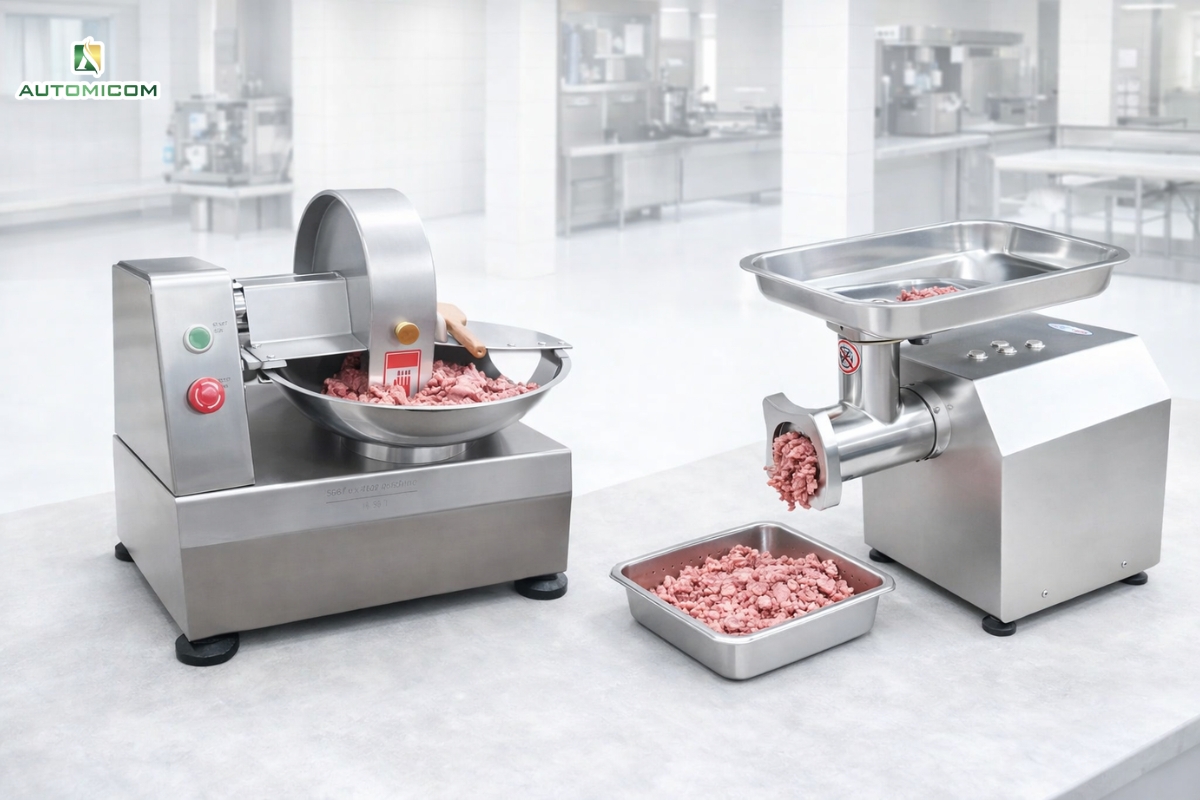
Working Principle Comparison
| Aspect | Bowl Cutter | Meat Grinder |
| Core Mechanism | Uses a rotating bowl with high-speed blades to process ingredients continuously | Uses a screw conveyor (auger) to push meat through a cutting plate |
| Processing Action | Performs cutting, mixing, and emulsifying at the same time | Performs grinding only (size reduction) |
| Ingredient Handling | Processes meat, fat, spices, and additives together in one step | Processes meat only, requires separate mixing later |
| Operation Style | Dynamic high-speed cutting system | Mechanical pressure and extrusion system |
| Output State | Produces a ready-to-use, uniform mixture | Produces ground meat that needs further processing |
Key Functional Differences
| Criteria | Bowl Cutter | Meat Grinder |
| Function Scope | Multi-function: chop, mix, emulsify | Single-function: grind |
| Processing Level | Advanced processing with structural transformation | Basic processing with structure preservation |
| Workflow Role | Used in final processing stage | Used in initial processing stage |
| Mixing Capability | Integrated mixing during processing | No mixing, requires additional step |
| Product Readiness | Output is final or near-final product | Output is intermediate product |
3. Types and Key Features of Each Machine
To better understand the capabilities of each machine, it is important to group each category into standard and industrial versions together. This approach highlights how the meat grinder (meat mincer) and the meat bowl cutter scale from small to large production.
Meat Grinder & Industrial Meat Grinder
Key Features:
- Compact models support small to medium-scale operations, while industrial models handle large-volume production
- Processes fresh and frozen meat into coarse, medium, or fine textures
- Equipped with interchangeable grinding plates for flexible output size
- Industrial versions include high-power motors for continuous operation
- Simple structure ensures easy cleaning and maintenance
- Cost-effective solution for both small businesses and large processing plants
- Advanced safety systems available in industrial models


Meat slicer/grinder/cutter
Price range: $790.00 through $1,690.00
This product has multiple variants. The options may be chosen on the product page 

Meat slicer/grinder/cutter
Price range: $2,200.00 through $6,200.00
This product has multiple variants. The options may be chosen on the product page 

Uncategorized
Price range: $2,500.00 through $6,500.00
This product has multiple variants. The options may be chosen on the product page 

Uncategorized
Price range: $790.00 through $990.00
This product has multiple variants. The options may be chosen on the product page 

Meat Processing Equipments
$0.00
This product has multiple variants. The options may be chosen on the product page 


Meat slicer/grinder/cutter
Price range: $420.00 through $790.00
This product has multiple variants. The options may be chosen on the product page 

Meat slicer/grinder/cutter
Price range: $1,300.00 through $1,800.00
This product has multiple variants. The options may be chosen on the product page Meat Bowl Cutter & Industrial Meat Bowl Cutter
Key Features:
- Performs chopping, mixing, and emulsifying in a single process
- Standard models suit commercial kitchens, while industrial models support mass production
- High-speed rotating blades create smooth and uniform textures
- Industrial versions offer larger bowl capacity and higher efficiency
- Optional vacuum technology improves product quality and shelf life
- Adjustable speed control for different processing needs
- Stainless steel construction ensures hygiene and durability
Overall, both meat grinder and meat bowl cutter machines scale effectively from standard to industrial models. While standard versions meet daily operational needs, industrial versions deliver higher capacity, stronger performance, and greater efficiency for large-scale production.




4. Texture, Product Quality & Applications
To provide a clearer and more scientific comparison between a bowl cutter and a meat grinder (meat mincer), the differences can be evaluated through five key criteria: processing mechanism, texture formation, ingredient integration, product consistency, and applications.
| Criteria | Bowl Cutter | Meat Grinder |
| Processing Mechanism | Uses high-speed rotating blades combined with a rotating bowl to perform cutting, mixing, and emulsifying in one continuous process, allowing all ingredients to be fully integrated | Uses a mechanical auger with cutting blade and perforated plate to push and grind meat only, focusing on particle size reduction without mixing |
| Texture Formation | Breaks down meat structure completely to create a fine, smooth, emulsified (paste-like) texture with no visible separation | Maintains meat fiber structure, resulting in a coarse to medium, granular texture with clearly visible particles |
| Ingredient Integration | Achieves even and complete distribution of meat, fat, water, and spices during processing, forming a homogeneous mixture | Provides limited integration, requiring an additional mixing step to distribute seasonings and ingredients evenly |
| Product Consistency | Produces highly uniform and standardized output, which is essential for industrial food processing and consistent product quality | Produces less uniform output due to variation in particle size and uneven ingredient distribution |
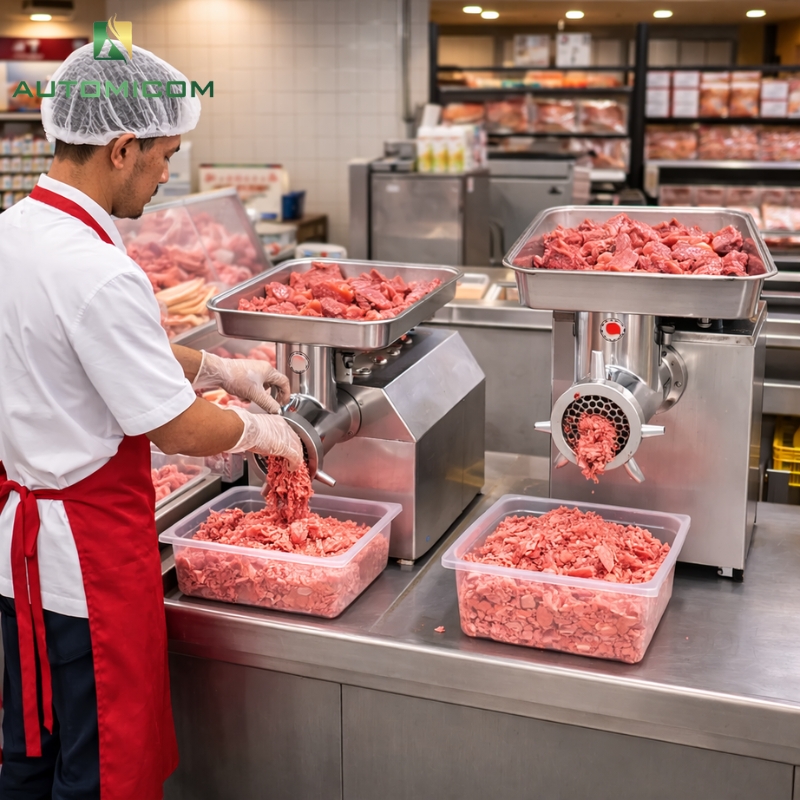
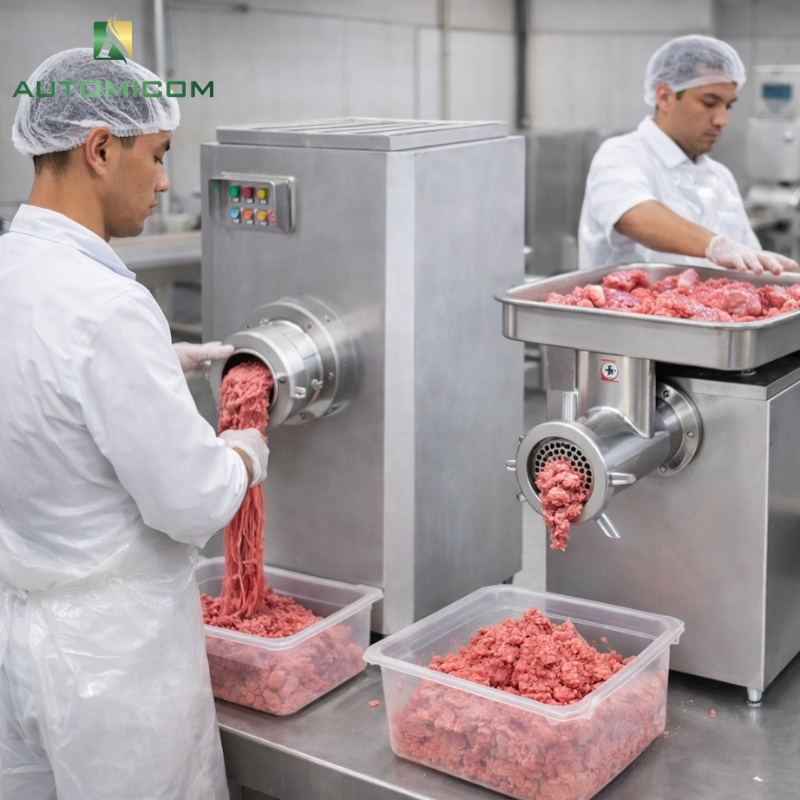
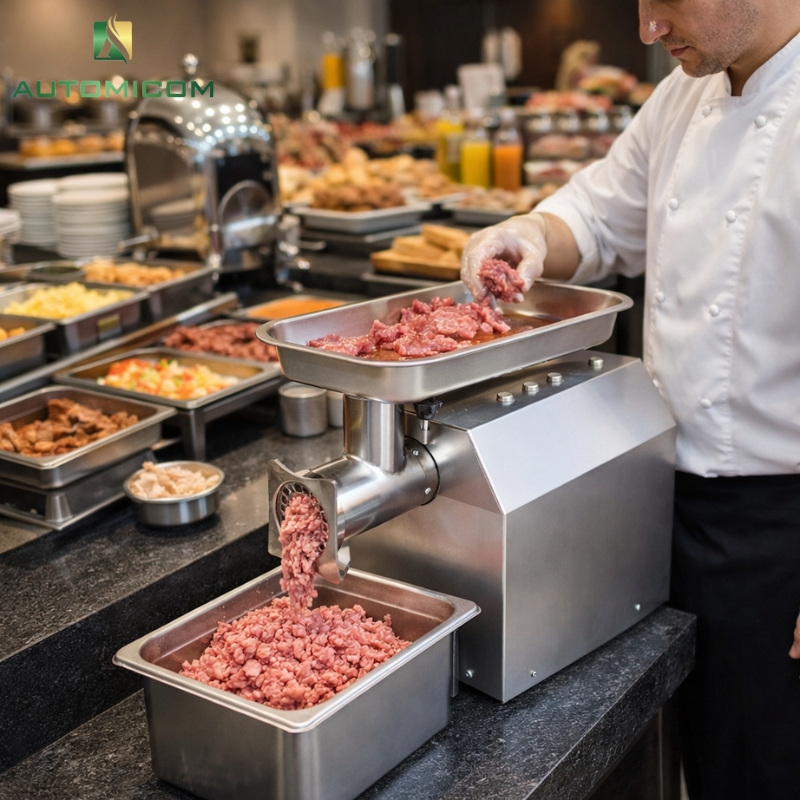
INDUSTRIES THAT USE MEAT GRINDER
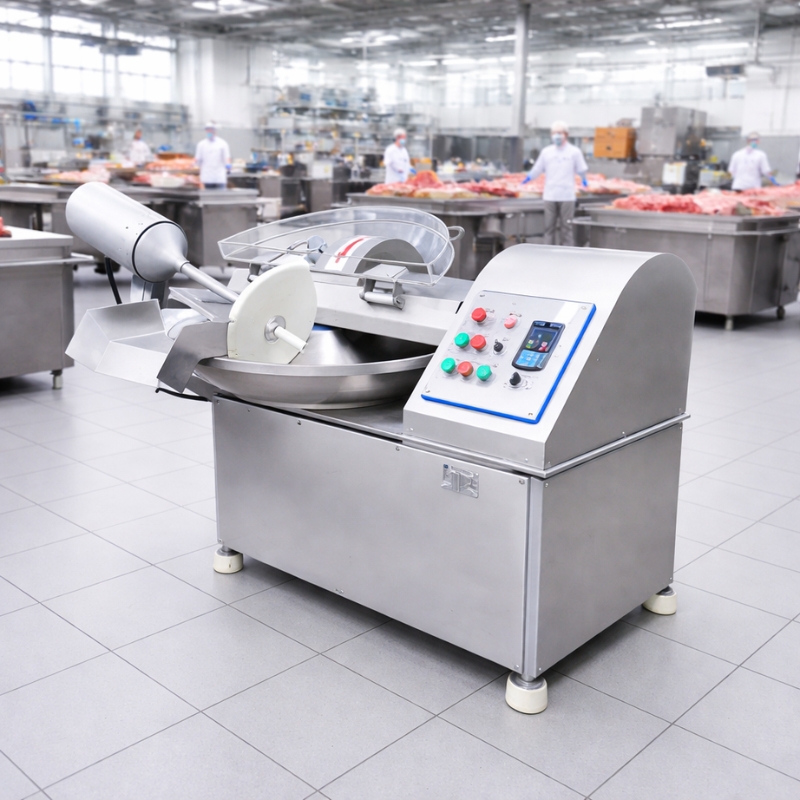
INDUSTRIES THAT USE BOWL CUTTER
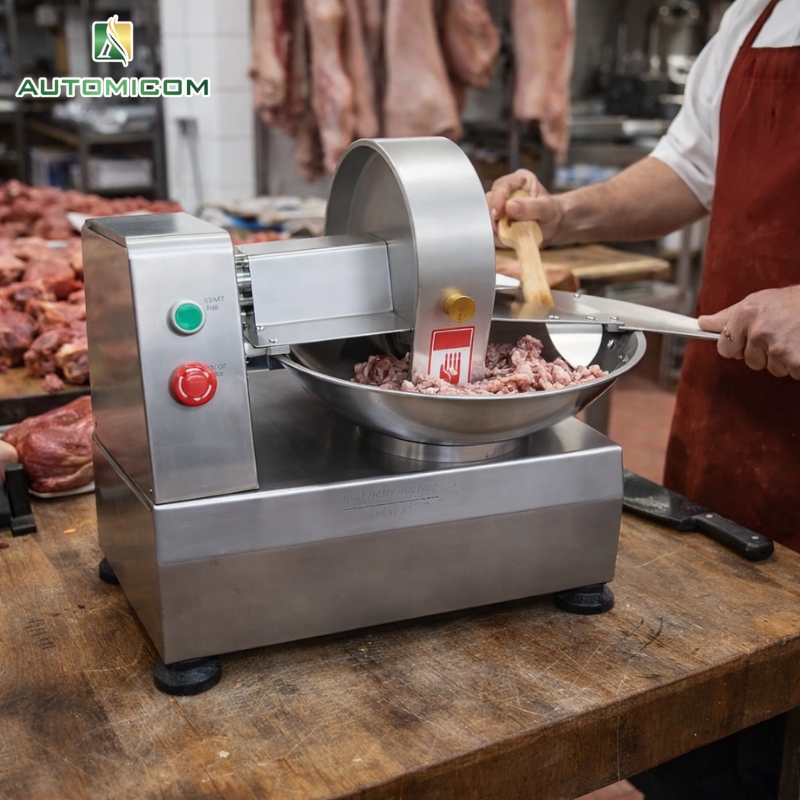
Restaurants and butcher shops use meat cutters for fast, consistent meat preparation.
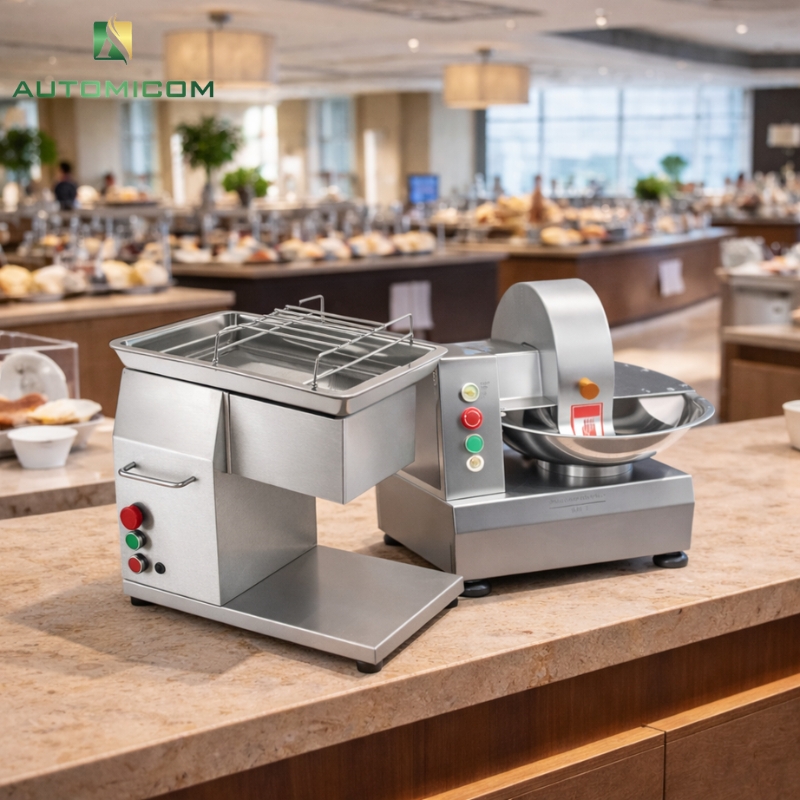
5. Conclusion
In simple terms, the difference between a meat grinder (meat mincer) and a meat bowl cutter is easy to understand:
👉 A meat grinder cuts meat into smaller pieces and keeps a coarse, natural texture
👉 A meat bowl cutter processes meat further to create a smooth, uniform, emulsified mixture
In practice:
- Use a meat grinder for basic preparation like minced meat or burgers
- Use a bowl cutter for processed products like sausages or pâté
👉 Therefore, the best approach in most production lines is to combine both machines:
→ The meat grinder handles the first step
→ The bowl cutter completes the final processing
This way, businesses can achieve both efficiency and high product quality.